
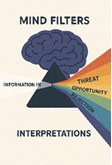
An exploration of perception
This Chapter Will Help You…
Understand how your internal filters shape what you see — and how to challenge them to unlock new perspectives
Understand how your internal filters shape what you see — and how to challenge them to unlock new perspectives
▣ Clarity starts with awareness. If your perspective feels off, start with your filters.
Understanding how our minds interpret reality.
Recognizing the impact of mental lenses on decision-making.
Strategies to shift perspectives for clarity and growth.
▣ Want better decisions? Learn to shift your lens — that’s where control begins.
“The way we see the world depends on how we’ve been taught to frame it. Once you realise you can shift the lens, you start to change your experience.”
— Richard Bandler
“The way we see the world depends on how we’ve been taught to frame it. Once you realise you can shift the lens, you start to change your experience.”
— Richard Bandler
Story 2: The Glasses in the Drawer
She had walked through the old house a hundred times.
Same creaking boards, same faded wallpaper, same dim light through dusty windows.
It was familiar. Predictable. A little grey, but safe.
Same creaking boards, same faded wallpaper, same dim light through dusty windows.
It was familiar. Predictable. A little grey, but safe.
The room at the back — the one with the drawer — hadn’t been opened in years.
Not because it was locked, but because it felt… unnecessary. What could possibly be in there worth seeing?
Not because it was locked, but because it felt… unnecessary. What could possibly be in there worth seeing?
But today was different.
Maybe it was the way the light had changed.
Maybe she was just tired of the sameness.
Maybe it was the way the light had changed.
Maybe she was just tired of the sameness.
She opened the drawer.
Inside, resting on a faded cloth, was a pair of glasses — not prescription, but old-fashioned lenses with tinted frames. Curious, she lifted them, wiped away the dust, and put them on.
And the room changed.
Colours she hadn’t noticed came to life. Corners that once seemed dark revealed quiet detail — photos on the wall, scratches on the floor from a long-gone pet, even the slight smile in the edge of a painting. The light, it turned out, had always been there. She’d just never seen it like this before.
She took them off. The dullness returned.
Put them back on. The richness returned.
Put them back on. The richness returned.
A strange thought struck her:
What if I’ve been walking through more than just this house with the wrong lenses?
What if I’ve been walking through more than just this house with the wrong lenses?
Not wrong as in bad — just outdated.
Built for protection, for caution, for old ideas of danger and threat.
Built for protection, for caution, for old ideas of danger and threat.
And now… maybe it was time to try a different pair.
Not to change what she saw, but to see what had been there all along.
Not to change what she saw, but to see what had been there all along.
She left the drawer open this time.
Because some filters don’t need to be worn forever.
Because some filters don’t need to be worn forever.
Welcome: The Mirror and the Guide
The Unseen Editor in Your Mind
A quick note about how this book will speak with you.
Imagine you’re standing before a calm lake, and the surface reflects your face back to you. You see your expression, your eyes, your posture. But the reflection isn’t just a copy—it’s a kind of conversation. It responds to the smallest movement, the slightest change in light.
This book is like that lake. It reflects the way you think, feel, and see the world. It listens carefully, mirrors your rhythm, and speaks in a tone that matches your own. Not to mimic you, but to say: “I’m here with you.”
Because real change happens when we feel understood, seen, and met where we are.
As you read, you may notice your own ideas deepening and expanding—because when your inner voice is reflected back with care, it becomes clearer and stronger.
So welcome. This isn’t just a book of answers. It’s a mirror—and a guide—for your own journey.
▪ Coaching Prompt:
“What are some recurring situations in your life where you always feel the same way—frustrated, anxious, dismissed? What might that say about the lens you’re viewing them through?”
“What are some recurring situations in your life where you always feel the same way—frustrated, anxious, dismissed? What might that say about the lens you’re viewing them through?”
Where Do These Filters Come From?
Our filters are not randomly assigned. They’re built over time:
Emotional imprints from childhood or traumatic moments.
Repeated narratives we heard growing up (“You’re always too sensitive.” “You’re the smart one.”).
Core values that shape what feels right, wrong, or necessary.
Identity stories we unconsciously write: “I’m the one who fixes things.” “I always mess up under pressure.”
Many of these lenses formed when we had limited tools to process what was happening. And once in place, they tend to confirm themselves—because we notice what the filter is designed to show.
▪ Coaching Prompt:
“What beliefs have you carried with you for years that might have made sense at one point, but now feel restrictive or outdated”
“What beliefs have you carried with you for years that might have made sense at one point, but now feel restrictive or outdated”
Seeing the Same World Differently
Imagine two people walk into the same meeting. One thinks, “Everyone’s judging me.” The other thinks, “I wonder what I can contribute here.”
Same environment. Different lenses. Different emotional states. And inevitably, different outcomes.
This is why change often begins not with changing the world, but with becoming aware of the lens through which we’re viewing it.
▪ Coaching Prompt:
“Think of a recent moment that upset or unsettled you. What meaning did you give it? Could someone else reasonably have seen it another way?”
“Think of a recent moment that upset or unsettled you. What meaning did you give it? Could someone else reasonably have seen it another way?”
Mental Shortcuts or Mental Traps?
Our brains love efficiency. Filters allow us to make quick judgments. But what starts as a helpful shortcut can become a trap—especially if we forget it's just one perspective among many.
Some common mental lenses include:
The “I must prove myself” lens
The “People will reject me” lens
The “I can’t get it wrong” lens
These filters narrow our field of vision, often amplifying anxiety or shame. Awareness invites the possibility of softening or widening them.
▪ Coaching Prompt:
“If your inner dialogue had a scriptwriter, whose voice would it sound like? Is it yours? Or someone else’s from your past?”
“If your inner dialogue had a scriptwriter, whose voice would it sound like? Is it yours? Or someone else’s from your past?”
The Power of Reframing
Reframing doesn’t deny what happened—it changes the meaning.
Where one person sees failure, another sees a lesson. Where one sees rejection, another sees redirection. Changing the lens changes the story.
Reframes can be powerful pivots in a coaching conversation:
“This means I’m not good enough.”
➜ “What if this means you're being redirected to something better aligned?”
➜ “What if this means you're being redirected to something better aligned?”
“They don’t care.”
➜ “What if they’re overwhelmed and don’t know how to respond?”
➜ “What if they’re overwhelmed and don’t know how to respond?”
▪ Coaching Prompt:
“What is one belief you hold about yourself that causes pain or limitation? What might a kinder, more helpful version of that belief sound like?”
“What is one belief you hold about yourself that causes pain or limitation? What might a kinder, more helpful version of that belief sound like?”
Cleaning the Lens: Awareness, Curiosity, Choice
You can't change a lens you don’t know you're wearing. The process starts with:
▣ Outcome Tip: Awareness creates choice. Choice creates power.
Awareness – spotting your go-to narratives and emotional patterns.
Curiosity – asking, “Where did this come from?” “Is this still useful?”
Choice – deciding whether to keep the lens, soften it, or swap it out entirely.
Coaching often shines a light on these hidden assumptions. It's not about fixing people. It’s about helping them see what they couldn’t see before—so they can choose with more freedom.
▪ Coaching Prompt:
“What might shift in your life if you saw your assumptions as options, not facts?”
“What might shift in your life if you saw your assumptions as options, not facts?”
Closing Metaphor: Fog and Focus
Imagine being inside a lighthouse, surrounded by thick fog. You can’t see the sea, the sky, or the ships. But the fog isn’t permanent. It just sits between you and what’s already there.
Your filters can create that fog—blurring the edges of reality. But once you become aware of the lens, you can start to clear it. Even a small shift in angle can bring an entirely new part of the horizon into view.
You don’t need to throw away your lenses. Just learn how to look through them—and when to take them off.
▣ Recap — Chapter 2: Shift the lens: Filters create their own reality — help them adjust theirs.
Before You Move On…
Ask yourself: what’s one belief or assumption you’ve never questioned — and what if it’s only one version of the truth?
Ask yourself: what’s one belief or assumption you’ve never questioned — and what if it’s only one version of the truth?
▤ Next, we turn our focus inward to the emotional state you return to most often—your Emotional Home—and how it quietly influences nearly every choice you make.
Like changing the lenses on a pair of glasses, think about one perspective you could adjust right now — and how it might change what you see.
Reflection Chapter 2: Mind Filters and Mental Lenses
–––– Take a breath. Let the image settle before you write. ––––
Key Takeaways
• Your filters shape your experience of reality.
• Beliefs and assumptions often go unchallenged.
• Changing the lens can change everything.
Self-Reflection Prompts
• What belief or mental filter have you never questioned?
• How has it shaped the way you see yourself or others?
• Can you recall a moment where shifting perspective changed how you felt?
• What filter might be distorting your view right now?
From Insight to Action
“One belief I’m now willing to challenge is _____. I’m curious what else might be true if I shifted the lens.”
For Personal Growth Readers
You can’t always control your first thought — but you can learn to change the lens it’s coming through. Which lens are you ready to adjust?
For Coaches
What filters might your client be unaware of? How can metaphor or story help them see it differently?
If You Are Both
When was the last time you assumed your perspective was the only valid one? What would curiosity offer you there?
Return to Index
Chapter 3: Your Emotional Home
— The Hidden Driver
This Chapter Will Help You…
Spot your emotional default setting — the state you keep returning to — and why it might feel familiar, even when it hurts.
Spot your emotional default setting — the state you keep returning to — and why it might feel familiar, even when it hurts.
“We don’t just live in houses — we live in emotions. Some are warm and comforting. Others are worn, drafty, or even dangerous. But they’re familiar. And that’s what keeps us coming back.”